Project Overview
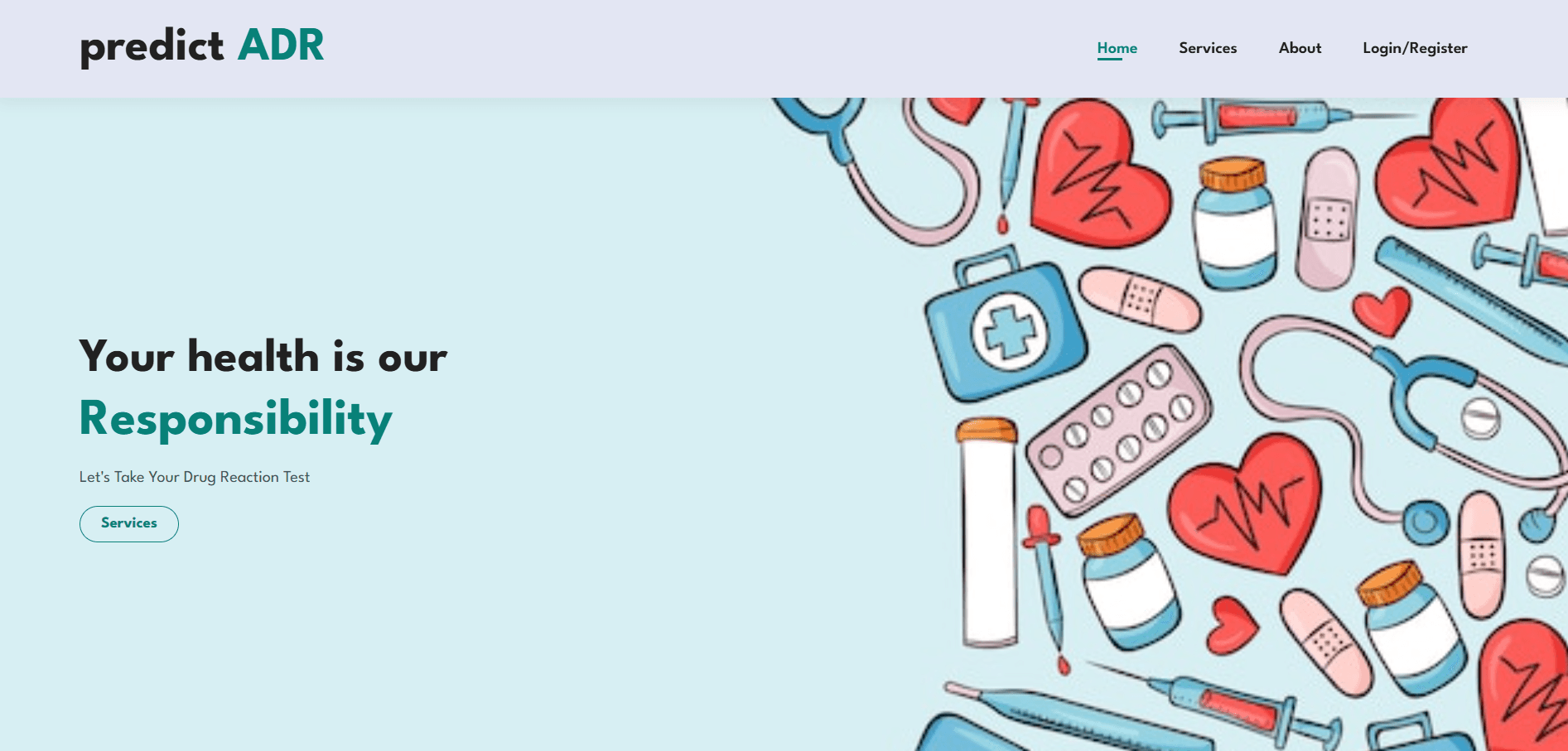
Visit WebsitePredictADR is a web application designed for a medical platform that uses machine learning to predict adverse drug reactions. I was responsible for building the entire frontend user interface, ensuring a clean, intuitive, and responsive experience for healthcare professionals. The goal was to create an accessible tool that allows users to input patient data and visualize prediction results effectively.
Key Features
A clean and structured form-based UI for healthcare professionals to input patient data easily and accurately.
Tech Stack


UI/UX & Responsiveness
Intuitive Information Architecture:
The website’s structure was meticulously planned to guide users seamlessly. Forms and results pages are easily accessible, allowing healthcare professionals to quickly perform predictions and view crucial data.
Clean and Structured UI:
The design focuses on a clean, form-based layout that prioritizes user experience. Clear typography, structured content, and a refined color palette make it easy to input patient data and understand complex prediction outputs.
Seamless Responsive Experience:
A key focus was ensuring the site looks and functions perfectly on all devices. The design adapts fluidly, from large desktop screens to smaller mobile devices, providing a consistent and professional experience for all users.
Challenges & Learnings
Integrating with the Backend:
The primary challenge was ensuring smooth communication between my JavaScript-based front-end and the PHP backend. This required careful coordination and a clear understanding of the data flow and API endpoints to accurately display the machine learning model's output.
Translating a Technical Model into a User-Friendly UI:
Making the complex outputs of a machine learning model understandable to users was a significant challenge. I had to design the UI to present the data in a digestible and actionable format for healthcare professionals.
Meeting Client Specifications:
Working closely with the client to understand their precise requirements for data entry forms and result displays. This involved multiple iterations and a flexible approach to development to meet their specific needs.
Balancing Aesthetics with Functionality:
A key learning was balancing an attractive design with core functionality. The interface needed to be not only visually appealing but also highly functional, fast, and responsive for a professional environment.
Final Outcome
Successful Product Launch: Successfully launched a functional and user-friendly frontend that met all of the client's specifications for the predictive tool.
Enhanced User Experience: Developed an intuitive interface that simplifies a complex process, making it easier for healthcare professionals to use the tool efficiently.
Demonstrated Collaboration Skills: The project highlights my ability to work effectively with backend developers, ensuring a seamless and integrated final product.
Showcased Frontend Proficiency: The project stands as a strong example of my skills in building robust, performant, and responsive web applications using core web technologies.